



Did you know that pursuing a medical degree in the heart of Europe can cost up to 50% less than in neighboring Western nations? While the dream of studying abroad often feels like a financial mountain, the actual cost of living in Poland for students remains one of the most accessible in the European Union. You’re likely worried about how your budget will stretch across six years of medical school, especially with the complexities of exchange rates between the Polish Złoty (PLN) and the Indian Rupee (INR). It’s a natural concern for families who want to ensure a stable future without encountering hidden financial traps.
This guide provides a definitive breakdown of your expected monthly expenses for 2026, from the bustling streets of Warsaw to more affordable academic hubs like Łódź. We’ll demystify everything from dormitory fees, which can start as low as 400 PLN, to the daily price of groceries and public transport. By the end of this article, you’ll have a clear, realistic budget in both PLN and INR. You’ll also discover practical strategies to save money while maintaining a high quality of life during your medical journey. Let’s examine the numbers that make Poland a premier, high-ROI destination for international students.
Key Takeaways
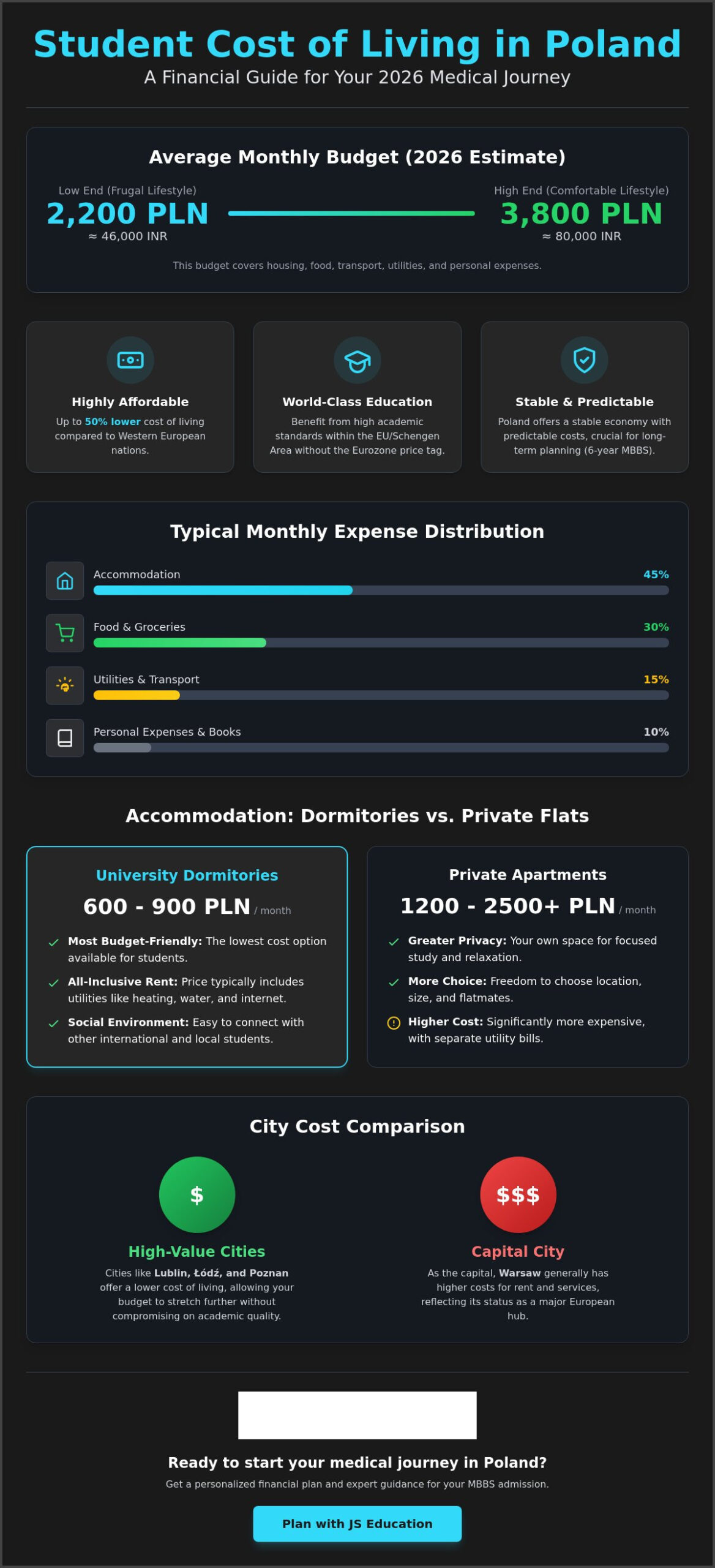
- Understand the realistic monthly budget for 2026, ranging from 2,200 PLN to 3,800 PLN based on your lifestyle and city choice.
- Compare the cost-effectiveness of university dormitories against private shared flats to secure the most affordable housing for your medical journey.
- Discover why the cost of living in Poland for students is up to 50% lower than in Western Europe while offering world-class academic standards.
- Identify high-value “student cities” like Lublin and Poznan where your budget stretches further than in the capital city of Warsaw.
- Learn practical shopping and transport strategies to manage your daily expenses efficiently and avoid common financial pitfalls for international residents.
What is the Average Monthly Cost of Living in Poland for Students in 2026?
As we approach 2026, Poland has established itself as a beacon of stability for international residents. Unlike the volatile price surges seen in Western Europe, the cost of living in Poland for students remains remarkably predictable. For a typical medical student, a monthly budget between 2,200 PLN and 3,800 PLN covers almost everything from housing to weekend leisure. This range varies depending on whether you choose the cosmopolitan pulse of Warsaw or the academic charm of Lublin. While the global economy shifts, Poland’s commitment to maintaining an affordable yet high-standard Education system in Poland makes it the most cost-effective medical hub in the Schengen Area. You get the benefit of EU standards without the staggering price tag of the Eurozone.
Currency and Exchange: Managing Your Finances
The Polish Złoty (PLN) continues to offer a strategic advantage over the Euro for Indian families. While the exchange rate fluctuates, the Złoty’s purchasing power for daily essentials remains high. In 2026, we recommend that students utilize multi-currency forex cards that allow for instant Złoty conversion to avoid high transaction fees. Opening a local bank account is a straightforward process; you’ll typically only need your passport, a valid student ID, and proof of residence. Most Polish banks now offer specialized “Student Accounts” with zero monthly maintenance fees and intuitive mobile apps that make managing your INR to PLN transfers seamless.
The ‘Big Three’ Expenses: Rent, Food, and Utilities
Understanding where your money goes is the first step toward financial peace of mind. On average, a student’s budget is distributed as follows:
- Accommodation (45%): This is your largest monthly commitment.
- Food and Groceries (30%): Poland’s agricultural sector keeps fresh produce affordable.
- Utilities and Transport (15%): Includes high-speed internet, electricity, and your 50% discounted student travel pass.
- Personal Expenses (10%): Books, clinical supplies, and social activities.
Energy costs have stabilized in 2026, but utility bills still fluctuate based on the season. Expect slightly higher heating costs during the Polish winter. A common trade-off involves choosing between a room near the city center or a more affordable apartment in the suburbs. Thanks to Poland’s excellent public transport, living further out can save you up to 600 PLN monthly without significantly increasing your commute time to the university clinics. This balance ensures you don’t have to compromise on your lifestyle while pursuing your medical ambitions.
Accommodation Options: Dormitories vs. Private Apartments
Choosing where to live is the most significant financial decision you’ll make after selecting your university. For many international students, this choice defines their overall cost of living in Poland for students. While the allure of a private studio is strong, the practical benefits of university-sanctioned housing often outweigh the independence of a solo flat, especially during the intensive first years of medical school. Securing your spot early is essential, as the highest-quality options near medical faculties often fill up by mid-July.
University Dorms: Pros, Cons, and Costs
Government-funded dormitories remain the most budget-friendly choice for first-year students. In 2026, a shared room in a university dormitory typically costs between 600 PLN and 900 PLN per month. The primary advantage here is the “all-inclusive” nature of the rent. Your monthly payment usually covers heating, electricity, water, and high-speed internet. This predictability is invaluable for families managing a strict budget from abroad. If you’re considering a specific institution, our Medical University of Lublin Poland: 2026 Admission Guide for Indian Students provides a detailed look at on-campus housing standards and application deadlines.
Renting Private Flats in 2026
If you prefer more privacy or a quieter study environment, the private market offers diverse options. According to official cost of living estimates, a private studio apartment in a major city can range from 1,500 PLN to 3,500 PLN. Many medical students choose to share a larger three-bedroom apartment with classmates to split the costs. This strategy brings the price per person down to approximately 1,200 PLN to 1,800 PLN. When browsing platforms like OLX or Otodom, it’s vital to look for the “Rental Contract” (Umowa najmu). You’ll need this official document to secure your student visa and temporary residence permit.
Don’t forget to factor in “Czynsz,” which is a mandatory administrative fee paid to the building management. This fee is often separate from the base rent and covers trash collection and building maintenance. You should also expect to pay a security deposit (Kaucja) equal to one or two months of rent before moving in. These initial costs can be a hurdle, but they’re a standard part of the cost of living in Poland for students. If you feel overwhelmed by the logistics of finding a safe, verified apartment, our team at JS Education can help you navigate the local rental market with confidence.
Ultimately, the right choice depends on your personal discipline and budget. Dorms offer a built-in social network and lower costs, while private flats provide the silence necessary for rigorous MBBS exam preparation. By understanding these nuances now, you can plan a seamless transition to your new life in Poland.
Daily Living: Food, Transport, and Essential Services
Managing your daily expenses is where you can truly optimize the cost of living in Poland for students. While accommodation is a fixed monthly cost, your spending on food and lifestyle is flexible. Poland offers a unique advantage for international students: a high standard of living paired with deeply subsidized services. By making informed choices about where you shop and how you travel, you can live comfortably without exceeding your budget. It’s about building a routine that balances your academic rigors with financial sustainability.
Grocery shopping in Poland is dominated by three main chains. Biedronka and Lidl are your best allies for weekly bulk shopping, offering fresh produce, dairy, and meat at competitive prices. For quick, late-night essentials, you’ll find a Zabka on almost every corner. While Zabka is convenient, it’s typically more expensive, so reserve it for emergencies. For Indian students, sourcing familiar ingredients is easier than ever in 2026. Major cities like Warsaw, Krakow, and Wroclaw host specialized international grocery stores where you can find lentils, basmati rice, and authentic spices at reasonable rates. This accessibility ensures you don’t have to compromise on the comfort of home-cooked meals.
Eating Well on a Student Budget
One of Poland’s best-kept secrets is the ‘Bar Mleczny’ or Milk Bar. These are government-subsidized canteens that serve traditional, nutritious Polish meals like pierogi, soups, and cutlets for under 20 PLN. They’re a lifesaver for medical students with busy clinical schedules who don’t always have time to cook. While you can find detailed 2026 tuition fees and living costs on major academic portals, the real daily savings come from balancing home-cooked meals with these affordable local eateries. Typically, cooking at home costs about 600 to 800 PLN per month, whereas relying solely on restaurants could easily triple that figure.
Connectivity and Lifestyle Costs
Staying connected is both simple and affordable. In 2026, a comprehensive mobile plan with unlimited data and calls generally costs between 30 and 50 PLN per month. Most student apartments include high-speed fiber internet in the rent, but if you need a standalone contract, expect to pay around 60 PLN. For physical well-being, many students utilize the ‘MultiSport’ card, which provides access to hundreds of gyms and swimming pools across the country for a flat monthly fee. The Legitymacja Studencka is your official electronic student ID card that grants you a mandatory 50% discount on all public city transport and national rail travel across Poland. Don’t overlook health insurance. While private providers offer faster English-speaking service, many international students opt for the public NFZ insurance, which costs approximately 50 to 100 PLN per month and covers most medical procedures in public hospitals.
City-by-City Comparison: Warsaw, Krakow, and Lublin
Your choice of city will be the single most influential factor in your monthly budget. While the national average provides a baseline, the cost of living in Poland for students varies significantly between the high-energy capital and the more relaxed academic hubs. Understanding these regional differences helps you align your financial resources with your academic and professional goals. It’s not just about the price of a room; it’s about the lifestyle and opportunities each location provides.
Warsaw: The Medical Hub
As the capital, Warsaw is undeniably the most expensive city in Poland. You should expect a total monthly budget between 3,000 PLN and 4,500 PLN. Rent in Warsaw is the primary driver of this increase, often costing 30% to 40% more than in smaller cities like Łódź or Poznań. However, this premium comes with significant advantages. Students at the Medical University of Warsaw: 2026 Admission Guide for Indian Students benefit from unparalleled clinical exposure and networking opportunities with international medical experts. If your goal is to practice in global healthcare hubs, the professional momentum you gain in Warsaw often justifies the higher initial investment.
Lublin: The Affordable Alternative
Lublin has long been a favorite for Indian medical aspirants seeking a balance between quality education and affordability. It’s a quintessential “student city” where your Złoty stretches much further. Local transport is efficient, and because the city is compact, you’ll often save on commuting costs compared to the capital. Leisure activities, from cafes to cinema tickets, are notably cheaper than in Warsaw or Krakow. Most importantly, Lublin offers a tight-knit international community, making the transition from India feel much more manageable and supportive. It’s an environment where you can focus entirely on your studies without constant financial strain.
Krakow and Wroclaw represent a middle ground. These cities offer a rich cultural experience and moderate living costs, typically ranging from 2,500 PLN to 3,500 PLN per month. For students interested in supplementing their budget, part-time job availability is highest in these major metropolitan areas. International students can earn between 2,000 PLN and 4,000 PLN per month in sectors like tutoring, logistics, or customer service. If you’re unsure which city fits your budget and career path, you can consult with our experts at JS Education to find your ideal match.
Financial Planning for Your MBBS Journey with JS Education
Transitioning from budget planning to the actual admission process requires a clear, multi-year perspective. While understanding the daily cost of living in Poland for students is vital, it’s only one piece of the financial puzzle. You must also account for the primary academic investment. For a detailed breakdown of what to expect regarding university costs, please refer to our guide on MBBS in Poland Fees 2026: A Comprehensive Cost Guide for Indian Students. Balancing these two pillars ensures that your medical journey remains stress-free and sustainable from your first semester through to graduation.
Managing Your 6-Year Financial Roadmap
A medical degree is a marathon, not a sprint. You’ll need to plan for annual inflation, which typically impacts rent and grocery prices by a small percentage each year. It’s also wise to set aside funds for biennial trips back to India; these flights are a significant periodic expense that many families overlook. Additionally, the Polish student visa application requires rigorous financial documentation. You’ll need to demonstrate that you have sufficient funds to cover both your tuition and at least one year of living expenses in a liquid bank account. We help you prepare these financial statements with precision to ensure your visa approval is seamless.
Currency fluctuations between the INR and PLN can also impact your long-term budget. We recommend maintaining a small buffer in your savings to account for these shifts. By planning for the entire six-year duration rather than just the first year, you protect yourself against unexpected economic changes. This proactive approach is exactly how we help our students maintain financial stability throughout their residency in Poland.
Why Professional Guidance Saves You Money
Many families fall victim to ‘consultancy scams’ that charge exorbitant hidden fees for basic administrative tasks. At JS Education, we prioritize transparency and procedural integrity. We don’t just facilitate admissions; we act as your strategic partner to identify the most cost-effective universities that match your academic profile. Our long-standing presence in Poland allows us to provide local insights that generic search results simply cannot offer. By avoiding unnecessary middlemen and overcharged services, you can redirect those savings toward your education and lifestyle. If you’re ready to start your journey, you can contact JS Education for a personalized Poland MBBS financial plan today.
Securing Your Medical Future in Poland
Poland remains a premier choice for Indian aspirants who seek world-class medical training without the financial burden of Western Europe. By choosing the right city and utilizing student discounts, the cost of living in Poland for students is manageable for most families. Whether you prioritize the clinical networking of Warsaw or the budget-friendly atmosphere of Lublin, your 2026 journey is built on a foundation of European standards and affordable lifestyle choices.
Navigating international admissions shouldn’t be a source of stress. JS Education has already been trusted by 500+ Indian medical students to provide a bridge between their ambitions and their reality. We offer expert guidance on NMC-recognized universities and maintain transparent 2026 fee structures so you never face a hidden cost. Our team is here to handle the complexities of visa documentation and housing logistics so you can focus on your studies. This professional support ensures your transition is safe, predictable, and successful.
Start your hassle-free Poland MBBS journey with JS Education today. Your path to becoming a global physician is closer than you think, and we’re ready to guide you every step of the way. With the right plan, your medical ambition in Poland is well within reach.
Frequently Asked Questions
Is Poland expensive for Indian students in 2026?
No, Poland remains one of the most affordable European destinations for Indian students. The cost of living in Poland for students is significantly lower than in the UK, USA, or Western European nations like Germany. You can enjoy a high standard of living, modern infrastructure, and world-class education while spending roughly 40% less on daily essentials than you would in neighboring Eurozone countries.
How much money do I need in my bank account for a Polish student visa?
You typically need to demonstrate sufficient funds to cover your first year of tuition fees plus approximately 10,000 to 12,000 PLN for annual living expenses. Consulates also require proof of funds for a return flight to India. It’s essential to maintain these funds in a liquid bank account to ensure a smooth visa approval process without financial queries.
Can international students work part-time in Poland to cover living costs?
Yes, international students enrolled in full-time degree programs can work without a separate work permit. The current minimum wage is approximately 28.10 PLN per hour. Many students earn between 2,000 and 4,000 PLN per month through part-time roles in logistics, tutoring, or customer service. This income is often enough to cover a significant portion of the monthly cost of living in Poland for students.
What is the average monthly rent for a student in Warsaw vs Lublin?
Rent in Warsaw is the highest in the country, typically ranging from 3,000 to 4,500 PLN for a private studio or a premium shared flat. In contrast, Lublin is much more budget-friendly. You can find quality student accommodation in Lublin for 1,500 to 2,500 PLN. Choosing a smaller city like Lublin or Poznan can save you nearly 50% on your primary housing costs.
Is health insurance expensive for students in Poland?
No, health insurance is quite affordable. Public insurance through the National Health Fund (NFZ) costs about 50 to 100 PLN per month and provides comprehensive access to public hospitals and specialists. While private insurance plans are available and offer faster English-speaking services, they are generally more expensive. Most Indian students find the public NFZ system to be both reliable and cost-effective.
How much does a meal cost in a Polish university canteen?
A full, nutritious meal in a university canteen or a traditional “Milk Bar” usually costs between 15 and 25 PLN. These subsidized eateries provide a variety of healthy options, including soups, grains, and meat dishes. Relying on these canteens for lunch is a strategic way to keep your food budget under 800 PLN per month while maintaining a healthy diet during your studies.
Are there Indian grocery stores in Poland?
Yes, you’ll find dedicated Indian grocery stores in all major Polish cities, including Warsaw, Krakow, and Wroclaw. These shops stock essential spices, basmati rice, lentils, and even frozen Indian snacks. While prices are slightly higher than in India, they are reasonable enough for regular shopping. Many students also use online delivery services to have Indian staples delivered directly to their dormitories.
Can I live comfortably on 2,500 PLN a month?
Yes, 2,500 PLN is a realistic and comfortable budget in cities like Lublin, Lodz, or Poznan. This amount covers a shared room in a dormitory, groceries, transport, and some social activities. However, in the capital city of Warsaw, 2,500 PLN would be considered a very tight budget. To live comfortably in Warsaw, we recommend planning for a budget closer to 3,500 PLN per month.