



Why would over 7,000 international students choose a Polish medical degree when seemingly cheaper options are available in other parts of Eastern Europe? You’re likely balancing the ambition of a world-class EU education against the practicalities of your family’s budget, perhaps fearing that “affordable” tuition might hide unexpected administrative traps or confusing currency shifts between PLN, EUR, and INR. It’s a high-stakes decision where financial transparency is just as vital as academic excellence.
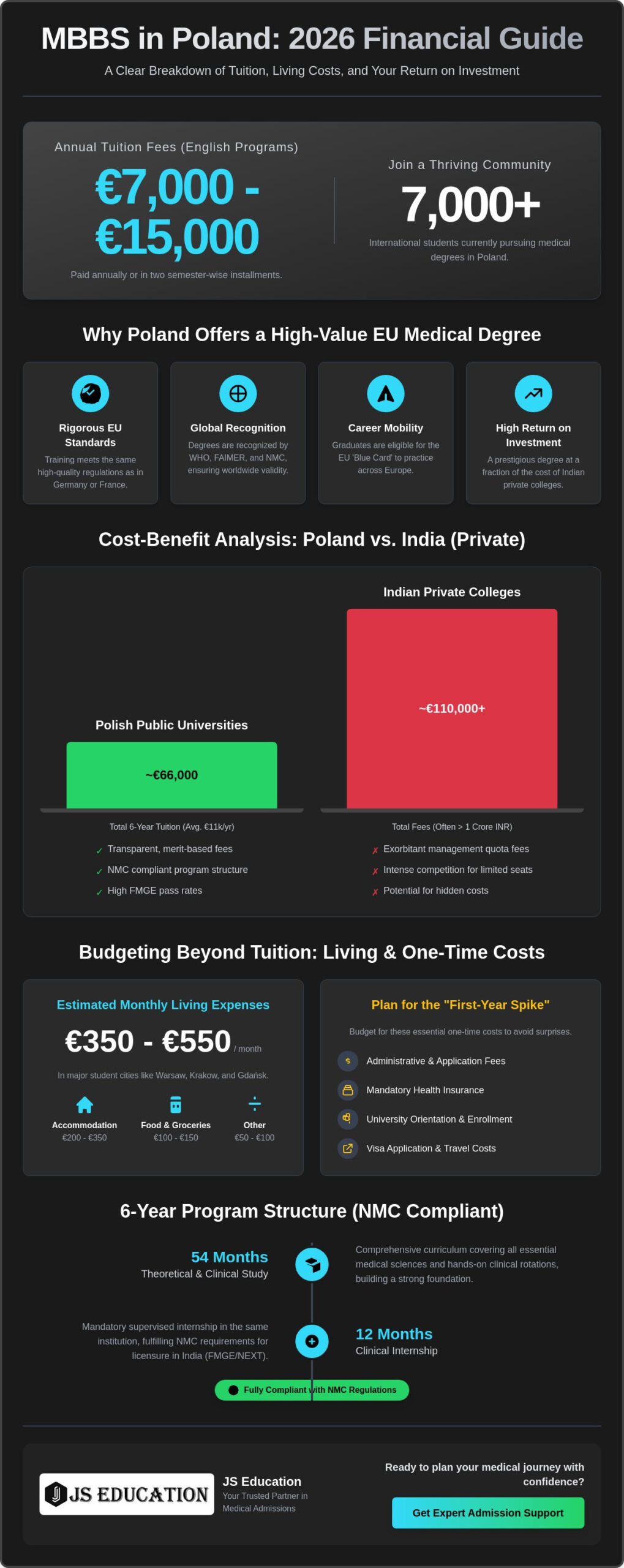
This guide provides a detailed, expert-led breakdown of the MBBS in Poland fees for the 2026 academic year to help you plan with confidence. You’ll gain a realistic understanding of the annual tuition range, which generally falls between EUR 7,000 and EUR 15,000, alongside a clear-eyed look at monthly living expenses in cities like Warsaw and Gdańsk. From mandatory health insurance to orientation costs, we’ve mapped out every essential detail. We’ll show you exactly how to budget for a prestigious medical degree that offers a high return on investment and global recognition without any hidden surprises after you arrive.
Key Takeaways
- Understand the annual tuition range for top-tier Polish medical universities, typically falling between EUR 7,000 and EUR 15,000 for the 2026 intake.
- Learn how to accurately budget for the MBBS in Poland fees by identifying one-time administrative costs and the “first-year spike” to avoid financial surprises.
- Discover a realistic monthly budget for accommodation and food in major student hubs like Warsaw, Krakow, and Gdańsk.
- Gain clarity on the differences between public and private university fee structures to find the best fit for your family’s financial plan.
- Explore how expert support ensures secure tuition transfers and transparent currency management throughout your six-year medical journey.
The Financial Landscape of MBBS in Poland for 2026
Poland has solidified its position as a premier destination for Indian medical aspirants looking toward the 2026 intake. While many students initially look at neighboring non-EU countries for lower costs, they quickly realize that Poland offers a different caliber of education. When you evaluate the MBBS in Poland fees, it’s essential to understand that you’re investing in a system that adheres to rigorous European Union standards. This isn’t just about a title; it’s about receiving training in facilities that meet the same healthcare regulations as those in Germany or France. The investment reflects the quality of clinical exposure and the high-tech infrastructure available to every student.
The 6-year program structure is a significant financial and academic commitment that requires careful planning. This duration is specifically designed to align with international requirements, including the latest National Medical Commission (NMC) guidelines for Indian students. To remain compliant with Indian regulations in 2026, a medical degree must consist of at least 54 months of theoretical study followed by a 12-month clinical internship in the same institution. Poland’s MD programs naturally fulfill these criteria, ensuring your degree is valid for the FMGE/NEXT licensing exams. You can browse a comprehensive list of Polish universities to identify the diverse range of public and private institutions that offer these standardized English-medium programs.
Why Poland Offers High ROI for Medical Students
The European Credit Transfer and Accumulation System (ECTS) credits provide a standardized way to measure your academic workload and learning outcomes across the entire European Higher Education Area. This system ensures that your hard work is globally recognized by bodies like the WHO, FAIMER, and the NMC. The return on investment extends far beyond your graduation day. As a graduate of a Polish medical university, you gain eligibility for the European ‘Blue Card.’ This status facilitates global career mobility, allowing you to pursue residency or practice medicine in various EU member states where there is a high demand for skilled doctors.
Poland vs. India: A Cost-Benefit Comparison
In India, the competition for government seats is intense, and the alternative often involves paying exorbitant management quota fees at private colleges. These costs can often exceed 1 crore INR, making them inaccessible for many families. Polish public medical universities offer a transparent, merit-based fee structure that is often more affordable than Indian private institutions. It’s also vital to consider the “hidden” costs of choosing cheaper, non-EU destinations. If a degree doesn’t meet the 2026 NMC standards, the cost of being unable to practice in India is a price no student should pay. Polish universities prioritize financial transparency, ensuring you know your exact obligations before you even apply.
Detailed Tuition Fee Breakdown for Top Polish Universities
Navigating the various financial options for medical school requires a clear view of the current academic landscape. While Poland is widely known for its high standards, the MBBS in Poland fees can vary significantly based on whether you choose a historic public institution or a modern private university. For the 2026 intake, most international students can expect to pay between EUR 7,000 and EUR 15,000 per year for English-taught General Medicine programs. These costs are typically paid annually, though many universities allow students to split the payment into two semester-wise installments to make the financial burden more manageable for families.
The average annual tuition for English-medium MBBS programs in Poland for 2026 generally falls between EUR 7,000 and EUR 15,000 across most recognized medical institutions. It’s vital to remember that tuition is just one part of the financial equation. When preparing your documentation for the official Polish student visa requirements, you’ll need to demonstrate that you have the funds to cover both these fees and your living costs. This transparency from the Polish government helps ensure that students don’t face financial hardship after they’ve already started their studies.
Top-Tier Public Universities and Their Fees
Public universities in Poland are often the first choice for Indian students due to their long history and high FMGE pass rates. For instance, the Medical University of Warsaw is a prestigious option where total tuition for the six-year program is approximately EUR 112,800, which averages out to about $21,800 annually depending on your specific payment plan. Another highly sought-after institution is the Medical University of Lublin Poland, which offers a robust curriculum and a welcoming environment for international cohorts. Other prominent schools like Jagiellonian University Medical College have annual fees around $17,502, reflecting the value of a degree from one of the oldest universities in the world. If these figures feel complex, you can consult with our advisors to get a customized fee breakdown for your preferred university.
Private Medical Schools: An Alternative Path
Private medical institutions in Poland provide a valuable alternative for students who prioritize modern infrastructure and smaller class sizes. While the tuition premiums at private schools can be higher than at public universities, this often covers access to cutting-edge simulation centers and highly individualized clinical training. These schools sometimes offer more flexible admission timelines, which can be a lifesaver if you’ve missed the early deadlines for public institutions. Despite the higher price point, private schools must still meet the same rigorous EU accreditation standards, ensuring your degree carries the same weight as one from a public university. Choosing between these paths depends on your personal priorities and your long-term budget for MBBS in Poland fees.
Beyond Tuition: Administrative Fees and First-Year Costs
Families often fixate on the annual tuition, but the first year of medical school in Poland requires a distinct financial strategy. This ‘First-Year Spike’ occurs because of one-time administrative hurdles that don’t repeat in subsequent years. When you’re calculating the MBBS in Poland fees, it’s vital to look past the sticker price of the MD program. You’re entering a highly regulated European system where documentation and legal compliance carry their own specific costs. Budgeting for these early ensures that your focus remains on your studies rather than unexpected bank transfers.
University-mandated registration and confirmation charges are the first items to account for in your budget. For instance, the Medical University of Warsaw requires a EUR 1,000 confirmation fee to secure your seat, which is non-refundable. According to the Official Guide to Studying in Poland, these administrative steps are essential for establishing your legal status as an international student. You’ll also need to factor in the cost of notary certifications and the legalization of your Indian academic records. These processes ensure your 10+2 certificates meet the standards set by the Polish Ministry of Education, a step that often involves modest but necessary fees in both India and Poland.
Mandatory health insurance is another non-negotiable expense for the 2026 intake. Expect to pay approximately EUR 250 to EUR 300 annually for a policy that meets Polish visa requirements. While this provides comprehensive coverage and peace of mind, it’s a cost that must be settled upfront. Combined with initial medical check-ups required by the university, these health-related costs are small but critical components of your first-year financial plan.
Visa and Legal Residence Costs
Securing your Polish National Visa (Type D) is your first major legal milestone. This process involves specific application fees for Indian citizens at the embassy or consulate. Once you arrive, you’ll need to apply for a Temporary Residence Permit, known as the Karta Pobytu. This permit serves as your legal ID in the Schengen Area and requires renewal throughout your six-year stay. Don’t forget to set aside funds for legal translations; your birth certificate and other Indian documents must be translated into Polish by sworn translators to be officially recognized by local authorities.
University-Specific Hidden Charges
Small, functional costs can add up quickly during your first semester. You’ll need to purchase laboratory coats, stethoscopes, and specialized medical textbooks, which can cost several hundred Euros. Some institutions, like the Medical University of Gdańsk, charge an orientation week fee of approximately AUD 1,150 to help international students integrate. Other universities might have administrative ‘Notary Certification’ fees for internal document processing that aren’t always highlighted in initial brochures. Budgeting an extra EUR 1,500 to EUR 2,500 for these first-year essentials ensures your MBBS in Poland fees are fully covered without any last-minute stress.
Living Expenses in Poland for Indian Students: 2026 Budget
Planning for your medical education requires looking beyond the MBBS in Poland fees for tuition and examining the daily realities of life in Central Europe. While Poland remains more affordable than Western European nations, inflation and rising urban demand in 2026 mean that old budget estimates are no longer reliable. You’ll find that living costs vary significantly between cities. Warsaw, as the capital, typically demands a higher budget, with annual expenses ranging from EUR 6,000 to EUR 9,000. In contrast, cities like Gdańsk or Lublin offer a more balanced cost of living in Poland for students while still providing a high-quality student experience. Successful financial planning depends on understanding these regional differences before you pack your bags.
One of the greatest advantages of studying in Poland is the robust student discount system. By using your student ID or an International Student Identity Card (ISIC), you can access 50% discounts on public transport, including buses, trams, and trains. A monthly transport pass in most Polish cities is remarkably affordable, often costing less than 60 PLN (approximately 1,200 INR) after the student concession. These savings allow you to navigate your host city and even travel across the Schengen Area without straining your monthly allowance.
Accommodation: Dorms vs. Private Flats
Your choice of housing will be the largest variable in your monthly budget. University-managed hostels are the most economical choice, offering a safe and social environment. In Gdańsk, for example, hostel fees for the academic season from October to June are approximately $1,514, with lower rates during the summer months. If you prefer the autonomy of a private shared apartment, expect to pay more. A room in a shared flat in a major city can range from 1,500 PLN to 2,500 PLN per month. It’s also vital to account for “czynsz” or administrative rent and utilities like electricity and heating, which are often billed separately in private rentals. Most landlords require a security deposit equivalent to one month’s rent, which you must factor into your initial arrival costs.
Monthly Food and Lifestyle Budget
Managing your food expenses is where you have the most control over your 2026 budget. While university canteens provide quick, subsidized meals, most Indian students find that cooking at home is both healthier and more cost-effective. You can find Indian spices and lentils in “Sklep Indyjski” (Indian stores) located in larger cities. Essential items are reasonably priced; a liter of milk costs about 3.50 PLN, a loaf of bread is around 4 PLN, and a kilogram of rice is approximately 5 PLN. A monthly grocery budget of 800 to 1,200 PLN is usually sufficient for a single student. For a comprehensive breakdown of every expense category you’ll encounter across different Polish cities, our definitive 2026 guide to the cost of living in Poland for students covers everything from dormitory fees to daily grocery prices. Beyond food, don’t forget to set aside about 50 PLN for a high-speed mobile data plan and roughly 100 PLN for a student gym membership. If you need help creating a personalized budget for your specific university city, speak with our student coordinators for the latest local data.
Financial Planning and Admission Support with JS Education
Securing a seat in a prestigious European medical school is a significant milestone, but managing the financial logistics of a six-year program requires expert oversight. JS Education acts as your trusted advisor, ensuring you have a transparent and comprehensive view of the MBBS in Poland fees from the very beginning. We don’t just provide a list of numbers; we help you interpret them within the context of current exchange rates and international transfer protocols. Our primary goal is to eliminate the uncertainty and fear of hidden charges that often trouble international students and their families after they arrive on campus.
While Poland offers a world-class education at a competitive price point, it’s often beneficial to evaluate it against other high-standard European destinations. You can explore our Study Medicine in Czech Republic guide to compare tuition structures and living costs across different EU borders. This comparative approach ensures you’re making the most informed decision for your professional future. By working with a seasoned consultant, you avoid the common pitfalls of fraudulent agencies that promise “low-cost” degrees while hiding significant service charges in the fine print.
Our Step-by-Step Financial Guidance Process
We provide a structured path to help families manage the financial transition to Poland. This starts with personalized budget counseling tailored to your chosen university and city. We understand that bank requirements for education loans can be complex, so our team assists with all necessary documentation to ensure a smooth approval process. Before you depart, we conduct detailed briefings on managing finances locally. This includes advice on opening a Polish bank account, managing currency conversion from INR to PLN or EUR, and utilizing secure methods for tuition fee transfers to ensure your payments reach the university safely and on time.
Why Choose JS Education for Your Poland Admission?
Our deep expertise in NMC-compliant universities and EU admission standards makes us a pioneer in the field. We provide end-to-end support, managing everything from your initial academic documentation to your local arrival and hostel registration in Poland. We are invested in your long-term success, acting as a bridge between your current reality in India and your future as a globally recognized medical professional. If you’re ready to take the next step toward your medical career, contact our medical education consultancy India for a personalized 2026 fee breakdown and a hassle-free admission roadmap.
Secure Your Medical Future in Poland with Financial Clarity
Choosing to pursue a medical degree in Europe is a transformative decision that requires both academic ambition and financial precision. By understanding the full scope of MBBS in Poland fees, from the initial confirmation deposits to the monthly costs of living in vibrant cities like Warsaw or Gdańsk, you’ve already taken the most important step toward a successful international career. You now possess the data needed to distinguish between a simple “cheap” degree and a high-value investment that fully meets the 2026 NMC standards. This transparency is your greatest asset in avoiding the hidden traps that often derail a student’s journey.
JS Education brings over 20 years of experience in international medical admissions to your side as a trusted mentor. As an official partner of top Polish medical universities, we maintain a transparent, zero-hidden-cost policy that protects your family’s financial security. We’re here to ensure your transition is seamless and your focus remains entirely on your medical training. Get a Personalized 2026 MBBS in Poland Fee Estimate to start your journey with a partner who is truly invested in your outcome. Your path to becoming a world-class doctor is clear, and we’re ready to help you walk it with confidence.
Frequently Asked Questions
What is the average annual tuition fee for MBBS in Poland in 2026?
The annual tuition for English-taught medical programs generally ranges from EUR 7,000 to EUR 15,000, depending on the university’s prestige and location. Public institutions like the Medical University of Warsaw often sit at the higher end of this scale, while universities in cities like Lublin or Gdańsk provide more mid-range options. It’s essential to check the specific MBBS in Poland fees for your chosen institution, as private universities may have different pricing structures than public ones.
Can Indian students pay the MBBS fees in installments?
Yes, most Polish medical universities allow international students to settle their tuition in two installments, typically at the start of each semester. This flexibility helps families manage their finances more effectively and reduces the impact of sudden currency fluctuations between the Euro and the Indian Rupee. While some universities might offer a small discount for full annual payments, the semester-wise option is the most common choice for Indian cohorts.
Are there any scholarships available for Indian students in Poland for 2026?
Full scholarships for the 6-year MD program are rare; however, merit-based tuition reductions are available for high-achieving students in their second year and beyond. The Polish National Agency for Academic Exchange (NAWA) occasionally offers programs for international researchers, but medical students primarily rely on university-specific awards for academic excellence. These small grants can help offset a portion of your living expenses if you maintain a top-tier GPA throughout your studies.
How much is the monthly cost of living in Poland for an Indian student?
A realistic monthly budget for an Indian student ranges from 1,500 PLN to 2,500 PLN, which is approximately 32,000 to 53,000 INR. This estimate includes shared accommodation, groceries, and local transport, though your actual spending will depend heavily on your host city. Warsaw is the most expensive hub, while students in smaller university towns often find they can live comfortably at the lower end of this range without compromising on quality.
Do Polish medical universities require NEET scores for admission?
Yes, a qualifying NEET score is a mandatory requirement for all Indian students who plan to practice medicine in India after graduation. While some Polish universities may focus on their own entrance exams or interview processes for admission, the National Medical Commission (NMC) requires NEET qualification for the degree to be valid in India. You must ensure your NEET score is current and meets the qualifying percentile for your category during the year of admission.
Is the 6th-year internship in Poland paid or unpaid?
The sixth year of the Polish MD program is a clinical internship year that is integrated into the curriculum and is generally unpaid for international students. This year is critical because it provides the 12 months of hands-on clinical training required by the NMC to sit for licensing exams back in India. While you won’t receive a salary, the high-quality clinical exposure in Polish hospitals is an invaluable part of your medical training.
What are the one-time admission charges for Polish medical schools?
You should budget between EUR 1,500 and EUR 2,500 for one-time administrative costs during your first year. These charges include the university’s confirmation fee, which secures your seat, alongside orientation fees and the cost of legalizing your Indian academic documents. These are essential MBBS in Poland fees that don’t repeat in subsequent years, but they must be settled before you begin your first semester.
How does the cost of MBBS in Poland compare to MBBS in Georgia?
Poland is generally more expensive than Georgia, but it offers a degree that adheres to strict European Union standards and provides better global mobility. While Georgian universities often have lower tuition, Poland provides superior clinical infrastructure and the advantage of being in the Schengen Area. The slightly higher investment in Poland often results in a better return on investment for students who wish to practice in the UK, USA, or across Europe.